
Why Selling a Home Healthcare Business Requires Specialized Expertise
Sell home healthcare business opportunities are at an all-time high, driven by aging demographics and growing demand for in-home care. For founders of agencies generating between $2M and $100M in annual revenue, navigating the M&A landscape requires specific knowledge of valuation, regulatory compliance, and buyer expectations that differ from other industries.
Quick Steps to Sell Your Home Healthcare Business:
- Prepare Financials: Clean up 3 years of statements and normalize EBITDA.
- Value the Business: Medical agencies often sell for ~2.84x EBITDA; non-medical averages ~2.87x SDE.
- Ensure Compliance: Verify HIPAA adherence and licensing transferability.
- Engage an Advisor: Specialized intermediaries can increase sale prices by approximately 21%.
- Market Strategically: Target private equity and strategic buyers through confidential listings.
- Timeline: Expect 6-10 months for the full process, including due diligence.
The complexity of selling a home healthcare business stems from unique factors like Medicare/Medicaid reimbursement, patient privacy laws, and state licensing. Whether you operate a skilled nursing agency or a non-medical franchise, understanding these nuances is the difference between a standard exit and a premium one.
For guidance on preparing for a transaction, explore our resource on Business Sale Preparation. When you’re ready to discuss your exit with advisors specializing in essential services, contact The Advisory IB for a consultation.
I’m Oliver Bogner, Managing Partner at The Advisory Investment Bank. We’ve guided hundreds of essential service owners through successful exits. My experience helping founders sell home healthcare business assets has shown that specialized M&A guidance is vital for a life-changing exit.
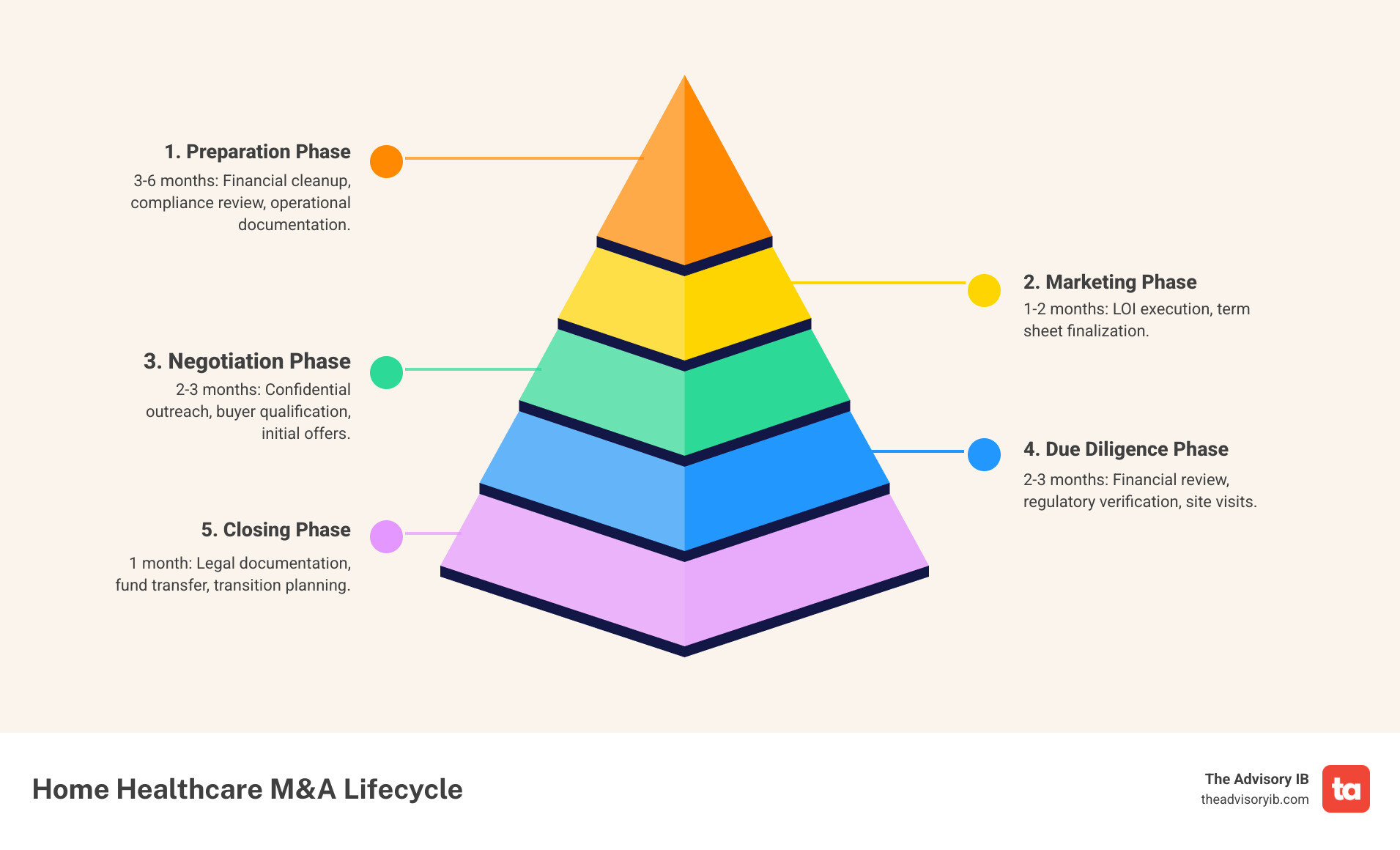
Strategic Steps to Sell Home Healthcare Business
When you decide to sell home healthcare business, you must first distinguish between medical and non-medical models. Home healthcare agencies provide clinical services like wound care and physical therapy, requiring licensed nurses and strict regulatory adherence. Non-medical home care focuses on personal care, such as meal preparation and companionship, often facing lower barriers to entry and simpler licensing.
These differences impact Business Valuation. Medical agencies often command multiples around 2.84x EBITDA, while non-medical businesses typically sell for an average of 2.87x Seller’s Discretionary Earnings (SDE). Mid-market agencies generally trade between 4x and 7x EBITDA.
| Feature | Medical Home Healthcare Business | Non-Medical Home Care Business |
|---|---|---|
| Services Offered | Skilled nursing, physical therapy, medication management | Personal care, companionship, meal prep, transport |
| Staffing Requirements | Licensed nurses, therapists, medical professionals | Caregivers, personal care aides |
| Regulatory Complexity | High (Medicare/Medicaid, state licensure, HIPAA) | Moderate (state licensure) |
| Market Demand | Driven by medical necessity | Driven by aging population needs |
| Typical Valuation Metric | Earnings Multiple (EBITDA) | SDE Multiple |
Preparing to Sell Home Healthcare Business
Preparation significantly improves value. Your financial records must be impeccable; buyers scrutinize at least three years of statements. It is essential to normalize your EBITDA by documenting all add-backs, such as owner’s salary and one-time expenses. Bad bookkeeping is a primary deal-killer.
Operational excellence is equally important. Documenting Standard Operating Procedures (SOPs) reduces owner dependence, making the business more attractive to acquirers. Compliance is non-negotiable; ensure all licenses are current and HIPAA compliance is strictly maintained. For a full guide, see our insights on Business Sale Preparation.
The Timeline to Sell Home Healthcare Business
Selling is a multi-month process. While the average sale takes six to ten months, preparation should begin 3-6 months before listing. The journey includes valuation, confidential marketing, buyer qualification, and due diligence. The due diligence phase is critical, as buyers review everything from contracts to regulatory history. For more on timelines, see Why Great Deals Take Time.
Key Considerations for Essential Service Valuations
Valuing a home healthcare business involves financial metrics and qualitative factors. For businesses under $25M in revenue, the Multiple of Seller’s Discretionary Earnings (SDE) is common. For larger businesses, EBITDA is the standard. Home healthcare businesses average an earnings multiple of 2.84, while non-medical care averages 2.87x SDE.
We use comparable sales data from platforms like DealStats and PeerComps to benchmark your business. For a deeper dive, our guide How Is My Business Valued? offers more detail.
Factors Influencing the Multiple
Several factors influence your final multiple:
- Client Concentration: High revenue concentration in a few clients is a risk. Diversifying your client base is crucial.
- Referral Sources: Stable referrals from hospitals and doctors demonstrate a sustainable model.
- Geographic Location: Operating in high-demand areas like Phoenix, Dallas, Houston, or Charlotte can increase value.
- Staff Retention: A reliable staff willing to stay post-acquisition is a major asset.
- Recurring Revenue: Stable, long-term contracts yield higher multiples.
Addressing these areas for Value Maximization before going to market can lead to a higher price.
Advantages of Franchise vs. Independent Sales
Franchise Advantages:
- Brand Recognition: Established brands bring inherent trust.
- Support Systems: Franchisors offer training and operational systems that reassure buyers.
- Buyer Pool: Attracts individuals seeking turnkey operations.
Franchise Considerations:
- Approval & Fees: Franchisors must approve buyers, and transfer fees often apply.
Independent Business Advantages:
- Flexibility: Offers complete autonomy without franchisor restrictions.
- No Fees: Absence of royalty or transfer fees can be appealing.
Regardless of the model, thorough preparation remains the most important factor in a successful sale.
Navigating the Buyer Landscape and Legal Problems
When you sell home healthcare business assets, you will encounter various buyer types:
- Individual Investors: Often entrepreneurs using SBA loans to acquire established businesses.
- Strategic Buyers: Existing home care agencies or healthcare organizations looking for geographic expansion.
- Private Equity Groups (PEGs): Active in the healthcare sector, PEGs seek to acquire and consolidate businesses to create larger platforms. They bring significant capital and strategic expertise.
Understanding Who Will Buy My Business? helps tailor your marketing and preparation.
Legal and Regulatory Compliance
- HIPAA and Privacy: Patient records cannot simply be handed over; strict HIPAA compliance is required to protect privacy during the transition.
- Licensing Transfer: State-specific rules for transferring home care licenses vary. Investigating these rules early prevents delays.
- The 36-Month Rule: For Medicare-certified agencies, this rule can impact the transfer of provider numbers if ownership changes too frequently.
- Non-Compete Clauses: Standard in most agreements, these prevent sellers from competing in the same market for a set period (e.g., 3-5 years).
An experienced attorney specializing in healthcare law is essential for navigating these industry-specific legalities.
The Role of an M&A Advisor
Engaging a specialized advisor is critical when you sell home healthcare business assets. Our role includes:
- Market Access: We have networks of qualified buyers, including PE firms and strategic acquirers.
- Expert Valuation: We use industry-specific multiples to ensure optimal pricing.
- Confidentiality: We use blind listings and strict NDAs to protect your operations.
- Negotiation: We act as an objective intermediary. Represented companies often earn significantly higher payouts. For more, see our Business Broker services and Navigating the Deal.
Maximizing Your Exit and Avoiding Common Pitfalls
To maximize value, proactive preparation is key. Highlight your strengths and rectify weaknesses before buyers begin their review.
Strategies for Value Maximization:
- Stabilize Revenue: Secure long-term agreements to demonstrate predictable income.
- Reduce Owner Dependence: Document SOPs and train your team to run the business without you.
- Strengthen Compliance: Maintain clean licensing records and robust quality assurance.
- Know Your Numbers: Keep accurate financial records and normalize your EBITDA.
Common Pitfalls to Avoid:
- Poor Financials: Unorganized books are the most common reason deals fail.
- Owner Dependence: If the business relies solely on you, buyers see high risk.
- Client Concentration: Relying on too few clients makes the business vulnerable.
- Undisclosed Liabilities: Hidden legal or tax issues will surface during due diligence and can kill the deal.
Understanding Red Flags That Scare Buyers allows you to address them early. Focus on areas that Increase Business Value to ensure a lucrative exit.
Post-Sale Considerations
- Transition Period: Most sales include a training period (e.g., 6-12 months of consultation) to ensure a smooth handover.
- Wealth Management: Strategic Post-Exit Planning with financial advisors helps secure your future.
- Legacy: Choosing a buyer who aligns with your values ensures your business continues to serve the community.
Frequently Asked Questions about Selling Essential Service Businesses
How is a home healthcare business valued compared to other services?
Home healthcare businesses are valued based on multiples of earnings (SDE or EBITDA). While the broader healthcare industry averages a 2.67x cash flow multiple, home healthcare specifically averages 2.84x EBITDA. Non-medical care often trades at 2.87x SDE. These multiples reflect specific risks like reimbursement structures and regulatory complexity, which differ from sectors like assisted living or skilled nursing.
What are the most common deal-killers during due diligence?
The most frequent deal-killers include disorganized financial records, heavy owner dependence, and regulatory non-compliance (such as HIPAA or licensing issues). High client concentration and undisclosed liabilities also frequently cause buyers to withdraw or lower their offers.
How can I maintain confidentiality while my business is on the market?
We maintain confidentiality through several layers of protection. We use “blind listings” that provide general data without identifying your company. Potential buyers must sign strict Non-Disclosure Agreements (NDAs) and pass a financial vetting process before receiving detailed information. This ensures your staff, clients, and competitors remain unaware of the sale until the appropriate time.
Conclusion
The decision to sell home healthcare business assets is a major milestone. While the market is robust, navigating valuation and compliance requires specialized expertise. At The Advisory IB, our AI-driven platform and success-based model are designed to deliver faster, stronger offers for essential service businesses. We guide you through every phase, from valuation to closing, ensuring your hard work translates into a lasting legacy. For more on planning your strategy, explore our resources on Exit Planning.