
Why Your Austin Business Needs an Exit Strategy—Yesterday
Business exit planning in austin, tx is the comprehensive process of preparing your company for sale or transition while maximizing its value. Key components include defining personal goals, assembling an advisory team, getting a professional valuation, creating a value improvement plan, and executing a structured transition.
For most Austin business owners, 80-90% of their wealth is tied up in their companies. Yet, only one in four has an exit plan, and a staggering three-quarters of those who exit are dissatisfied with the outcome. Without a structured plan, you could leave up to 71% of your business’s potential value on the table.
An exit plan is a comprehensive strategy to build a more valuable company, addressing all personal, business, financial, and legal aspects of your transition. Whether you plan to exit in five years or ten, proactive planning can increase your business value by 20% to 70%, allowing you to capitalize on Austin’s booming M&A market.
I’m Oliver Bogner, a two-time Forbes 30 Under 30 honoree and Managing Partner of The Advisory Investment Bank, where I specialize in guiding essential service business owners through successful exits. Having built and sold five companies myself before becoming an investment banker, I understand both sides of business exit planning in austin, tx and help founders achieve life-changing outcomes through competitive processes and expert guidance.
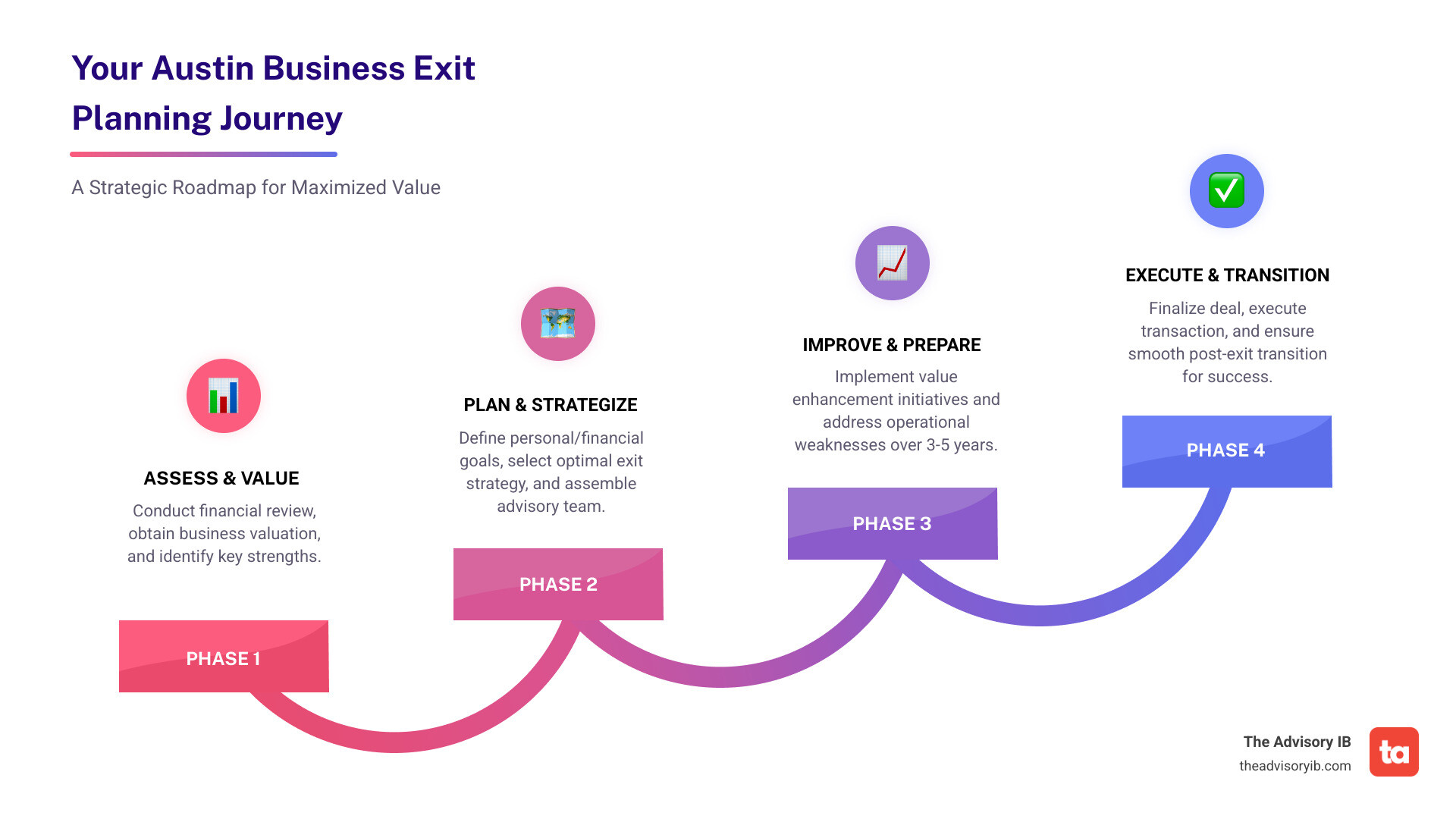
The Austin Edge: How the Local Market Impacts Your Business Sale
Austin isn’t just a city; it’s a phenomenon. Our vibrant economy, fueled by tech, innovation, and a constant influx of talent, creates a unique landscape for business owners. This “Austin Edge” significantly influences business exit planning in austin, tx.
Austin’s booming economy translates into a highly competitive M&A environment with a strong appetite for well-run businesses, especially in the essential services sector. This increased buyer pool can lead to higher valuations for prepared companies. Private equity firms are increasingly interested in these businesses for their stable revenue. You can learn more by reading Why Private Equity Loves Essential Service Businesses.
The growth in Austin means it’s not just about finding a buyer; it’s about attracting the right buyer who will pay for the true value you’ve built. Understanding Who Will Buy My Business? is a crucial first step. Proactive planning is a strategic imperative in this dynamic market, offering immense opportunities for those prepared to seize them.
Your 5-Step Blueprint for Business Exit Planning in Austin, TX
Starting your business exit planning in austin, tx journey can feel daunting, but a clear blueprint makes it a manageable and empowering process. Our 5-step approach focuses on value creation, personal financial planning, and emotional readiness to ensure you’re prepared for life after your business. This isn’t just about selling a company; it’s about transitioning to your next chapter with confidence and financial security. Ensuring your family’s future is also paramount, making it vital to Don’t Leave Your Family a Mess: Your Business Succession Plan Starts Here.
Step 1: Define Your Personal and Financial Objectives
Before looking at your business, we look at you. What are your personal goals, desired exit timeline, and envisioned lifestyle? This step involves a candid assessment of your financial needs, from retirement income to future ventures. Understanding how much annual after-tax income you’ll need is paramount, as this deep dive into your personal “why” forms the bedrock of your entire exit plan.
Step 2: Assemble Your Advisory “Dream Team”
Exiting your business requires a “dream team” of advisors. This team typically includes M&A advisors like us, financial planners, tax professionals, and legal counsel. Each plays a vital role in protecting your interests and maximizing your outcome. Our experience shows that a coordinated team leads to better results, with each advisor bringing specialized knowledge to the table.
Step 3: Understand Your Business’s True Value
Understanding your business’s true value is about seeing it through a buyer’s eyes. This step involves a comprehensive business valuation to assess financial health and identify any “red flags” that could deter buyers. We help you understand What Will My Multiple Be? and address potential issues detailed in Red Flags That Scare Buyers. Benchmarking against industry standards provides a realistic view of your market position.
Step 4: Create a Value Improvement Roadmap
With your goals and valuation clear, we create a roadmap to increase your company’s worth. This involves strengthening operations, improving financial reporting, and reducing owner dependency. Buyers want businesses with strong management and clean financials. We help you implement strategies to make your business more attractive and valuable, which is critical for essential service businesses. Learn more about Private Equity Accounting & M&A and find How Essential Service Businesses Maximize Valuation: What Buyers Pay Top Dollar For.
Step 5: Select the Optimal Exit Strategy for your business exit planning in Austin, TX
The final step is selecting the exit strategy that best aligns with your goals. This isn’t a one-size-fits-all decision. We review all options, from selling to a third party to transitioning to insiders, considering the financial implications, tax consequences, and your desired level of ongoing involvement. A strategic approach ensures your chosen path maximizes your net proceeds. Understanding Deal Structure Private Equity Secrets can also provide valuable insights.
From Good to Great: How to Maximize Your Company’s Value Before Exiting
How do you ensure your business goes from good to great in the eyes of a buyer? It’s about bridging the value gap through proactive business exit planning in austin, tx.
It boils down to making your company irresistible. Buyers look for businesses that are not only profitable but also have clear potential for future growth and minimal risk. Key value drivers include:
- Scalability: Can your business grow without a proportional increase in costs? Buyers want to see systems and processes that can handle expansion.
- Recurring Revenue Models: Subscription services and long-term contracts provide predictable income, which is highly attractive.
- Customer Diversification: A diverse customer base reduces risk and makes your business more resilient.
- Brand Differentiation: A strong brand identity and a clear competitive advantage in the Austin market command higher valuations.
- Operational Independence: Buyers prefer companies with strong management teams that can run smoothly without the founder’s constant oversight.
Focusing on these areas builds a stronger, more resilient company. This strategic value improvement is a core part of the M&A process. For more detailed strategies, explore Increase Valuation: Essential Service Business and understand How the M&A Process Actually Works in Plain English.
Choosing Your Path: Common Exit Strategies Explored
When it comes to business exit planning in austin, tx, there’s no single “right” way to transition. The optimal path depends heavily on your personal goals, financial needs, and the unique characteristics of your business. Here’s a look at the most common strategies:
| Exit Strategy | Timeline | Payout Structure | Owner Involvement (Post-Exit) |
|---|---|---|---|
| Sale to Third Party | Medium to Long | Lump sum, earn-outs, equity rollover | Minimal to none |
| MBO/ESOP | Long | Installment payments, seller financing | Phased transition, advisory |
| Family Succession | Very Long | Gradual transfer, potentially gifts or internal sale | Ongoing, mentorship |
Sale to a Third Party (Private Equity or Strategic Buyer)
This is often the path that leads to the highest potential valuation and a clean financial break for the owner. Selling your essential services business to a third party, whether a private equity firm or a strategic buyer, typically involves a competitive auction process. This is where the right advisory support excels, leveraging an AI-driven platform to connect you with the right buyers and facilitate faster, stronger offers. Understanding Who Buys My Business? Private Equity is key, as these buyers often bring capital and expertise to accelerate growth. A well-managed Competitive Business Auction can significantly drive up your sale price. In some cases, sellers may also engage in What Rolling Equity Means for Sellers, retaining a stake in the growing business.
Management or Employee Buyout (MBO/ESOP)
If preserving your legacy, rewarding loyal employees, and ensuring business continuity are high priorities, an MBO (Management Buyout) or ESOP (Employee Stock Ownership Plan) might be the right fit. These strategies often involve seller financing, allowing for a gradual transition of ownership and leadership. It’s a way to ensure the business you’ve built continues to thrive under familiar faces. This approach offers a phased exit, which can be emotionally satisfying for owners who want to see their team succeed.
Family Succession: A popular choice for business exit planning in Austin, TX
For many Austin business owners, the idea of keeping the business in the family is deeply appealing. This option allows for the generational transfer of wealth and a continuation of the family legacy. However, it often involves a very long-term planning horizon and can come with unique emotional complexities. Clear communication, establishing fair terms, and ensuring the next generation is truly prepared and capable are vital. Without proper planning, many business owners risk missing out on significant wealth transfers, as discussed in Why Most Business Owners Will Miss the Greatest Wealth Transfer in US History.
Why Your Austin Business Needs an Exit Strategy—Yesterday
Business exit planning in austin, tx is the process of preparing your company for a future sale or transition. A well-structured plan is not just a roadmap for a transaction; it’s a strategy to build a more valuable and resilient company, ensuring you secure the wealth you’ve worked hard to create.
The Austin Edge: How the Local Market Impacts Your Business Sale
Austin’s dynamic economy creates a competitive M&A environment, especially for well-run essential service businesses. This “Austin Edge” means a larger pool of potential buyers, including private equity firms, which can lead to higher valuations. Understanding and leveraging these local market trends through proactive business exit planning in austin, tx is crucial for attracting the right buyer and maximizing your company’s value. You can learn more about attracting buyers by reading Why Private Equity Loves Essential Service Businesses and Who Will Buy My Business?.
Your 5-Step Blueprint for Business Exit Planning in Austin, TX
A successful exit requires a clear plan. Our 5-step approach to business exit planning in austin, tx simplifies the process, focusing on value creation and personal readiness. Ensuring your family’s future is also paramount, making it vital to Don’t Leave Your Family a Mess: Your Business Succession Plan Starts Here.
Step 1: Define Your Personal and Financial Objectives
Start by defining what you want your life to look like post-exit. Clarifying your personal, financial, and lifestyle goals provides the foundation for your entire strategy.
Step 2: Assemble Your Advisory “Dream Team”
You need a team of experts, including M&A advisors, financial planners, and legal counsel, to steer the complexities of a sale. A coordinated team is critical for maximizing your outcome. Learn about the Benefits of Working with an Investment Bank? and Meet an Advisor to start building your team.
Step 3: Understand Your Business’s True Value
A professional business valuation is essential to understand how a buyer sees your company. This involves analyzing your financials, identifying strengths, and addressing potential Red Flags That Scare Buyers.
Step 4: Create a Value Improvement Roadmap
With a clear valuation, the next step is to create a plan to increase your business’s worth. This involves strengthening operations, improving financial reporting, and reducing owner dependency to make your company more attractive to buyers like private equity. Learn more about how this impacts valuation with our guides on Private Equity Accounting & M&A and How Essential Service Businesses Maximize Valuation.
Step 5: Select the Optimal Exit Strategy for your business exit planning in Austin, TX
Finally, choose the exit path that aligns with your goals. Whether it’s a third-party sale, a management buyout, or a family succession, the right strategy will consider tax implications and your desired future involvement. Understanding Deal Structure Private Equity Secrets can help inform this decision.
From Good to Great: How to Maximize Your Company’s Value Before Exiting
Maximizing your company’s value before a sale means making it irresistible to buyers. Focus on key value drivers like scalability, recurring revenue, customer diversification, brand differentiation, and operational independence. Building a business that can thrive without you is crucial. These improvements not only prepare you for a successful exit but also create a stronger, more resilient company. For more strategies, explore how to Increase Valuation: Essential Service Business and learn How the M&A Process Actually Works in Plain English.
Choosing Your Path: Common Exit Strategies Explored
When it comes to business exit planning in austin, tx, the optimal path depends on your personal goals and financial needs. Here’s a look at the most common strategies:
| Exit Strategy | Timeline | Payout Structure | Owner Involvement (Post-Exit) |
|---|---|---|---|
| Sale to Third Party | Medium to Long | Lump sum, earn-outs, equity rollover | Minimal to none |
| MBO/ESOP | Long | Installment payments, seller financing | Phased transition, advisory |
| Family Succession | Very Long | Gradual transfer, potentially gifts or internal sale | Ongoing, mentorship |
Sale to a Third Party (Private Equity or Strategic Buyer)
This path often yields the highest valuation and a clean break. A Competitive Business Auction, which we facilitate with our AI-driven platform, can significantly increase your sale price. Understanding who buys businesses like yours, such as Private Equity, is key. Some owners also Roll Equity to retain a stake in the company’s future growth.
Management or Employee Buyout (MBO/ESOP)
An MBO or ESOP is a great option for preserving your legacy and rewarding loyal employees. These strategies often involve a gradual transition, allowing you to see the business you built continue to thrive under familiar leadership. This approach offers a phased exit that can be emotionally satisfying.
Family Succession: A popular choice for business exit planning in Austin, TX
Passing the business to the next generation can continue a family legacy but requires long-term planning to steer potential complexities. Proper planning is essential to ensure a smooth transition and secure generational wealth, a topic we explore in Why Most Business Owners Will Miss the Greatest Wealth Transfer in US History.
Frequently Asked Questions About Austin Business Exits
When is the best time to start planning my business exit?
The best time to start your business exit planning in austin, tx is now. Ideally, you should begin at least 3-5 years before your target exit date. This proactive approach allows time to optimize your business and maximize its value. Waiting until you’re ready to leave limits your options and potential payout. For those on a shorter timeline, we offer insights on how to Sell Business Next 12 Months.
What are the biggest mistakes Austin owners make when exiting?
The most common mistakes we see Austin business owners make include:
- Waiting too long: Procrastination is the enemy of a successful exit.
- Poor financial records: Messy books are a huge red flag for buyers.
- Overestimating value: Emotional attachment can lead to unrealistic expectations. A professional, objective valuation is crucial.
- Ignoring emotional impact: Exiting a business is a major life change.
- Going it alone: Trying to steer the complex M&A landscape without a team of experts can be costly.
How do I know what my Austin-based business is worth?
Determining your business’s true worth requires a professional valuation by experienced M&A advisors. We consider a multitude of factors specific to your business and the current market, including:
- Financial Performance: Revenue, profitability, and cash flow trends.
- Market Conditions: The current M&A landscape, buyer demand, and industry multiples in Austin.
- Growth Potential: Future opportunities, scalability, and competitive advantages.
- Operational Strength: Your management team, systems, and customer diversification.
An accurate valuation is the cornerstone of effective business exit planning in austin, tx, setting realistic expectations and informing your strategy.
Begin Your Successful Exit Journey in Austin
Your business is a testament to your hard work and vision. As you look to your next chapter, proactive business exit planning in austin, tx is the key to securing your financial future and achieving a satisfying outcome. Don’t become another statistic of owner dissatisfaction or lost value.
We understand the unique dynamics of the Austin market and the needs of essential service business owners. Our AI-driven platform is designed to deliver faster, stronger offers and guide you through a seamless transition. Our 100% success-based model means our success is directly tied to yours.
Ready to open up the full potential of your business and start your next adventure with confidence? Let us guide you on this critical journey. Learn how we can help by visiting The Advisory. We’re here to turn your years of hard work into a well-earned, strategic exit.